Forthcoming steam weekends: 08-09 May 2027; 03-04 July 2027; 12 September 2027; 09-10 October 2027
Opening hours at other times: from 04 April 2026 to 24 October 2026 every saturday from 10 am to 5 pm.
Further information is available here.
Opening hours at other times: from 04 April 2026 to 24 October 2026 every saturday from 10 am to 5 pm.
Further information is available here.
08-09 May 2027: Saisoneröffnung
News
15.10.2026: A look back at last weekend
We look back with joy and satisfaction on last weekend at the Historic Locomotive Shed, where we held our autumn event. Around 1,200 visitors joined us in enjoying the lovely weather and the last chance this year to see our vehicles and those of our guests in action. Everything went brilliantly; our visitors were delighted and the equipment ran smoothly without a hitch. A great success!We would like to thank you, our guests, for coming, and we’d be delighted if you could recommend us to others and visit us again next year. Thanks also to everyone who made their vehicles available to us for the event, in particular the Hafenbahn Neustrelitz e.V. association, which made the special trips to Osterburg and Wittenberge harbour possible.
The year 2027 already promises great things. That’s when the State Garden Show will take place in Wittenberge, running from 21 April 2027 to 24 October 2027. That alone would be reason enough to make a trip to Wittenberge and visit our museum whilst you’re there. In fact, we are also expecting some special historic trains to run for the occasion. In all likelihood, the train sets and locomotives will be parked on the museum grounds or prepared for their return journey. Who knows – perhaps we’ll even be able to use the train sets for short trips in the surrounding area.
For us, the 2026 season is drawing to a close. We will be open on Saturdays up to and including 24 October 2026 and look forward to welcoming you. Of course, we’ll keep you updated on the latest developments in and around the locomotive shed. To make sure you don’t miss a thing, why not subscribe to our newsletter via our website www.dampflok-wittenberge.de or follow our Facebook page ‘Historischer Lokschuppen Wittenberge’? We hope you’ll continue to support us!
Finally, here’s a link to a wealth of photos taken by our photographer Sebastian during our event last weekend. We recommend switching on the slideshow function on your device and enjoying the retrospective for a few minutes.
https://photos.app.goo.gl/dADJ8sZBMhduXAQg9
Enjoy, and see you soon!
25.09.2026: Infos to Herbsdampf
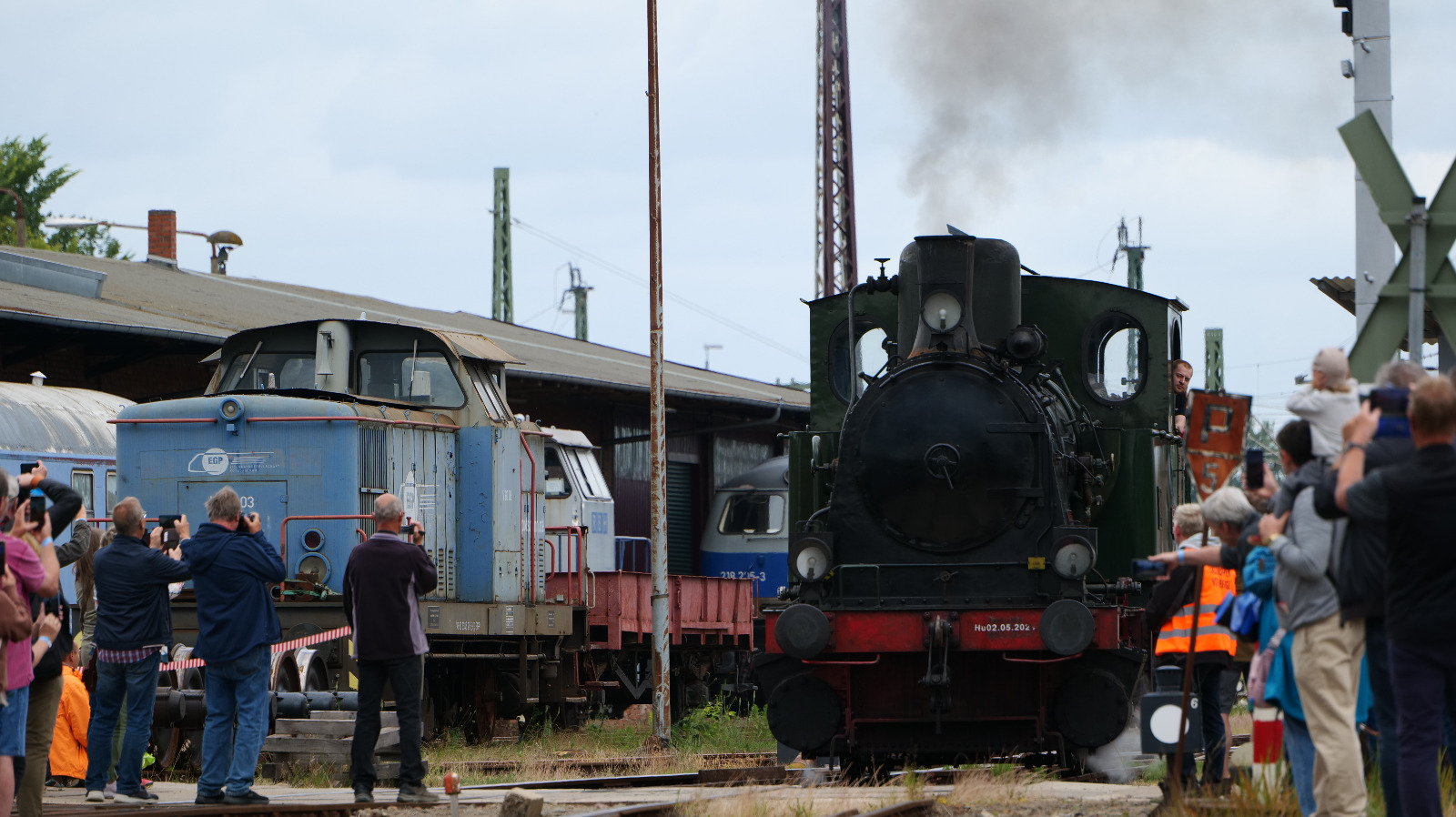
Dear friends of heritage railways,On the weekend of 10 and 11 October 2026, the wheels will be turning once again in Wittenberge. We are therefore delighted to welcome railway enthusiasts of all ages to our autumn event at the Historic Engine Shed. Our steam locomotive Emma will, of course, be back in action, competing with her modern sisters from the diesel locomotive fleet.
The locomotives will be in operation on Saturday between 10 am and 5 pm, and on Sunday between 10 am and 4 pm. Visitors will not only be able to admire them from the outside, but also ride along in the driver’s cab. Their sisters – the museum’s other locomotives – are also looking forward to welcoming visitors. Here, friendly museum staff will offer rare glimpses into the engine rooms and driver’s cabs. Also well worth a visit is the museum’s signal box, from which numerous points and signals on the museum grounds are operated.
We also offer guided tours of the grounds in a historic passenger carriage dating from the turn of the 20th century. Anyone wishing to experience the thrill of powering the train themselves can do so on a draisine. Naturally, food and drink will be available on site.
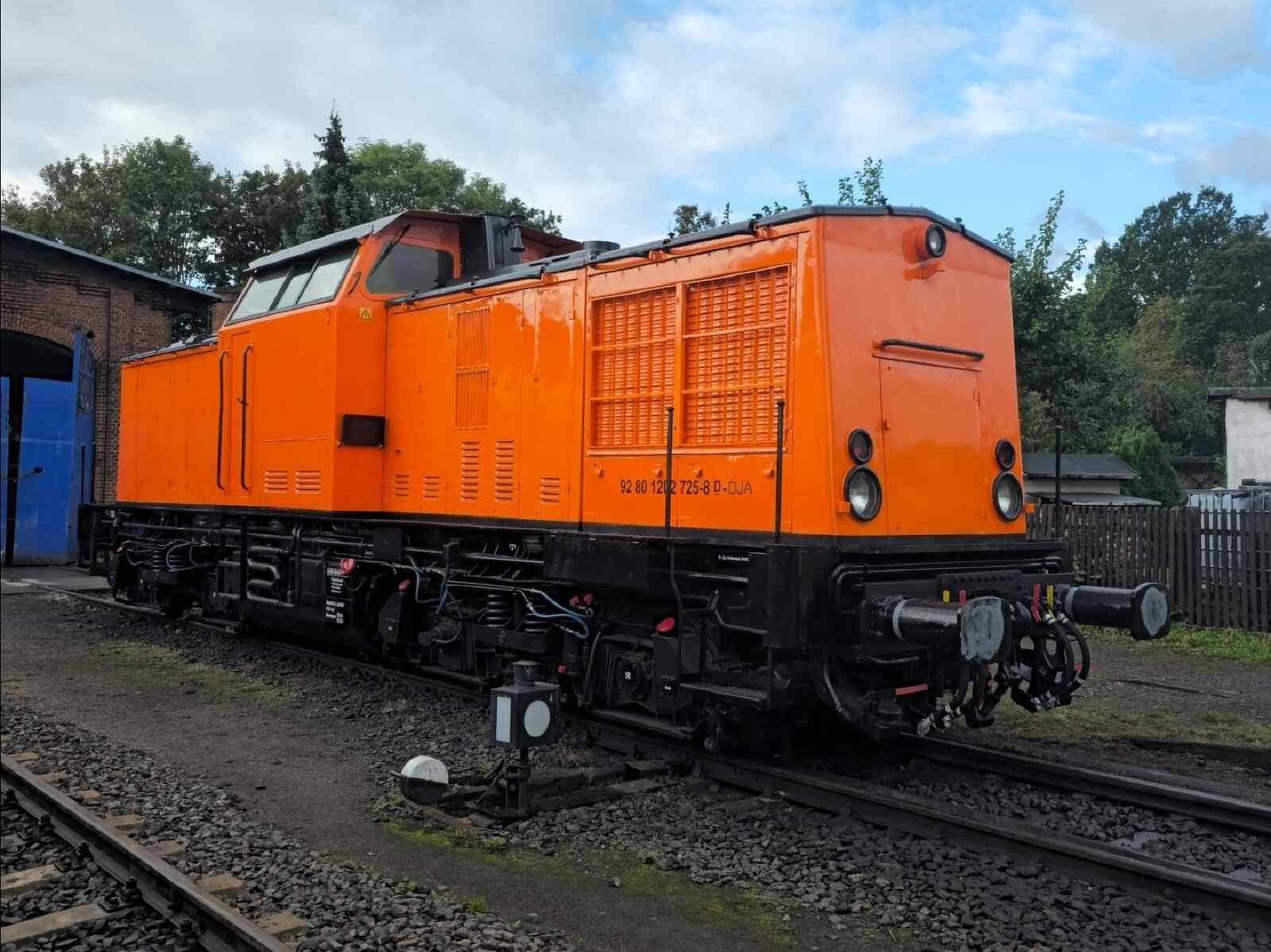
The highlight of each day will be the vehicle parades, which take place at around 2.00 pm. These will showcase various working exhibits from the museum in action. We are also planning to present diesel locomotive 112 725, which a partner organisation recently acquired and has restored to working order.
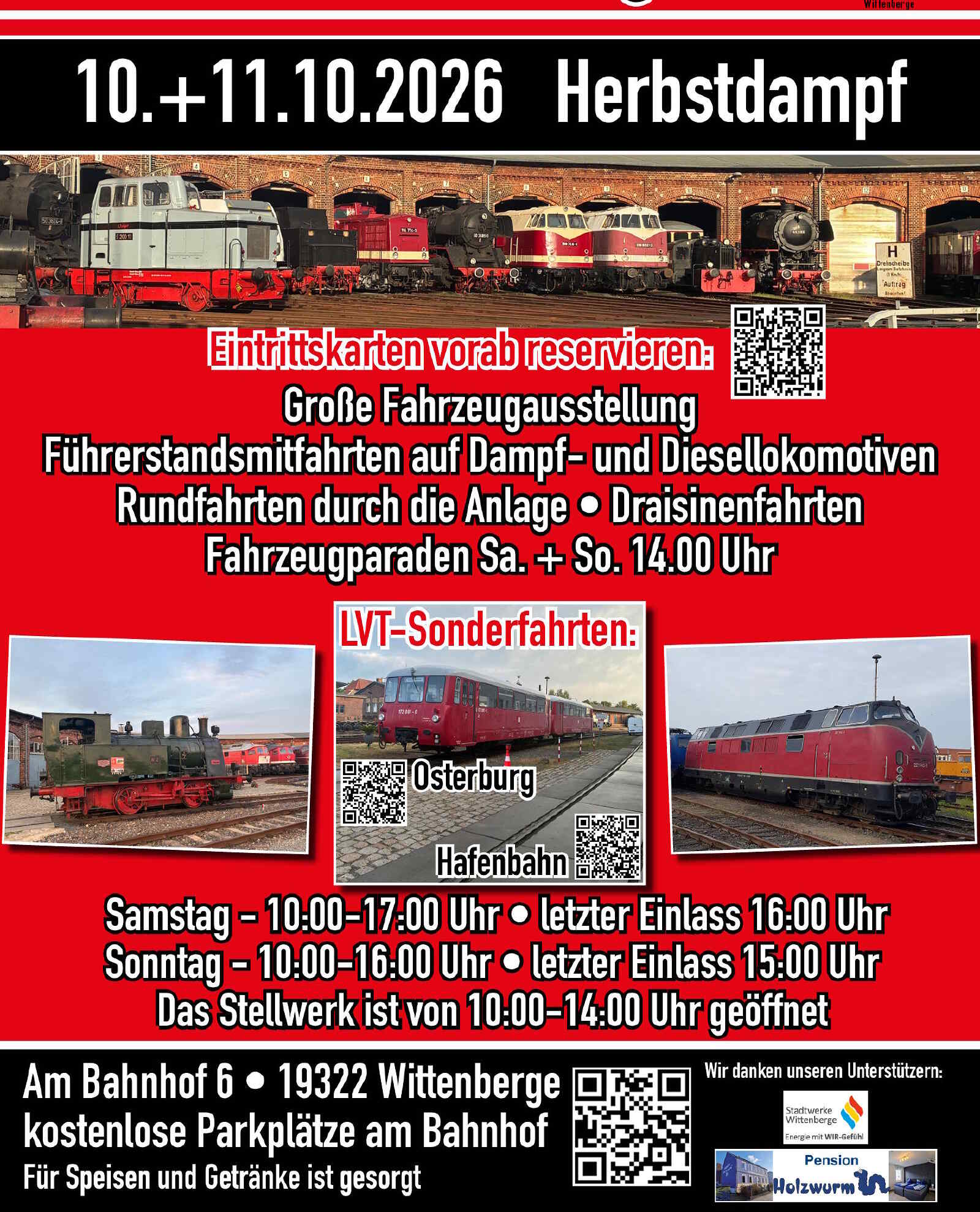
Tickets for our museum are available at the entrance to the museum grounds at a price of €8 (adults) / €4 (children) / €20 (families). Free parking is available in the vicinity of the station.
At this event, too, we will be offering special trips on the historic railcar – also known as the ‘Ferkeltaxe’ – operated by our colleagues from Neustrelitz.
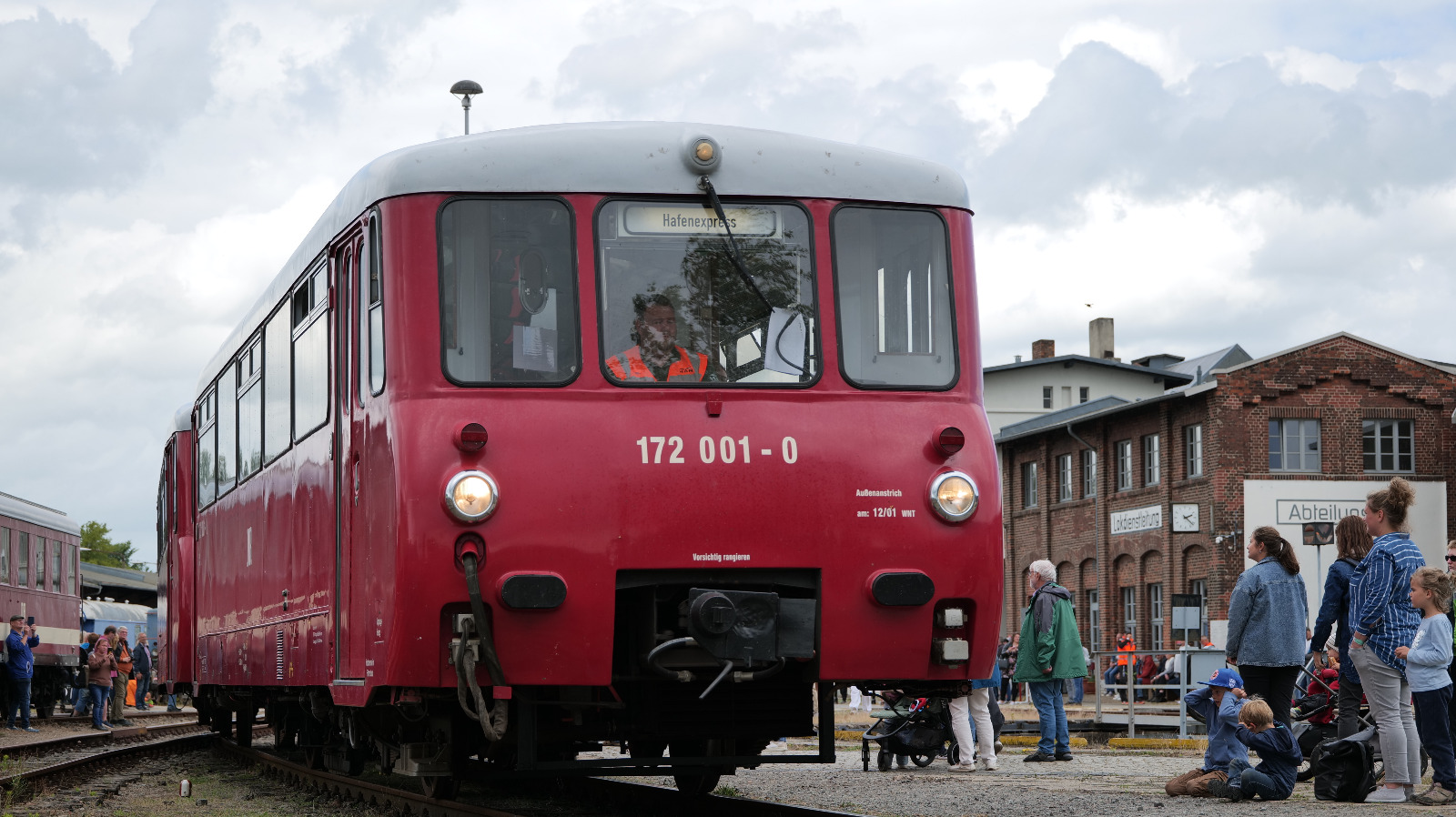
This time, we will not only be running trips through Wittenberge harbour from the museum grounds, but also back to Osterburg. All trips start and end at the museum grounds. Please be advised that boarding the train at Wittenberge station will not be permitted.
The trips to Osterburg depart on Saturdays and Sundays at 11.15 am, whilst the harbour tours start at around 2.45 pm and last approximately one hour. Separate tickets must be purchased for the trips, costing €9 / €6 (children aged 4 to 14) for the harbour tour and €20 / €10 for the trips to Osterburg. Discounted family tickets are available.
Tickets for the event and the special rail trips on the railcar are already available to buy online or on the day of the event at the venue. Tickets for the event at the Historic Locomotive Shed can be found via the following link: https://www2.fahrkartendrucker.de/index.php/de_de/newOrder/ticket/6339
Tickets for the trips to Osterburg are available via the following link: https://www2.fahrkartendrucker.de/index.php/de_de/newOrder/ticket/6357
You can book harbour tours here: https://www2.fahrkartendrucker.de/index.php/de_de/newOrder/ticket/6340
15.09.2026: Yes, we can do it!
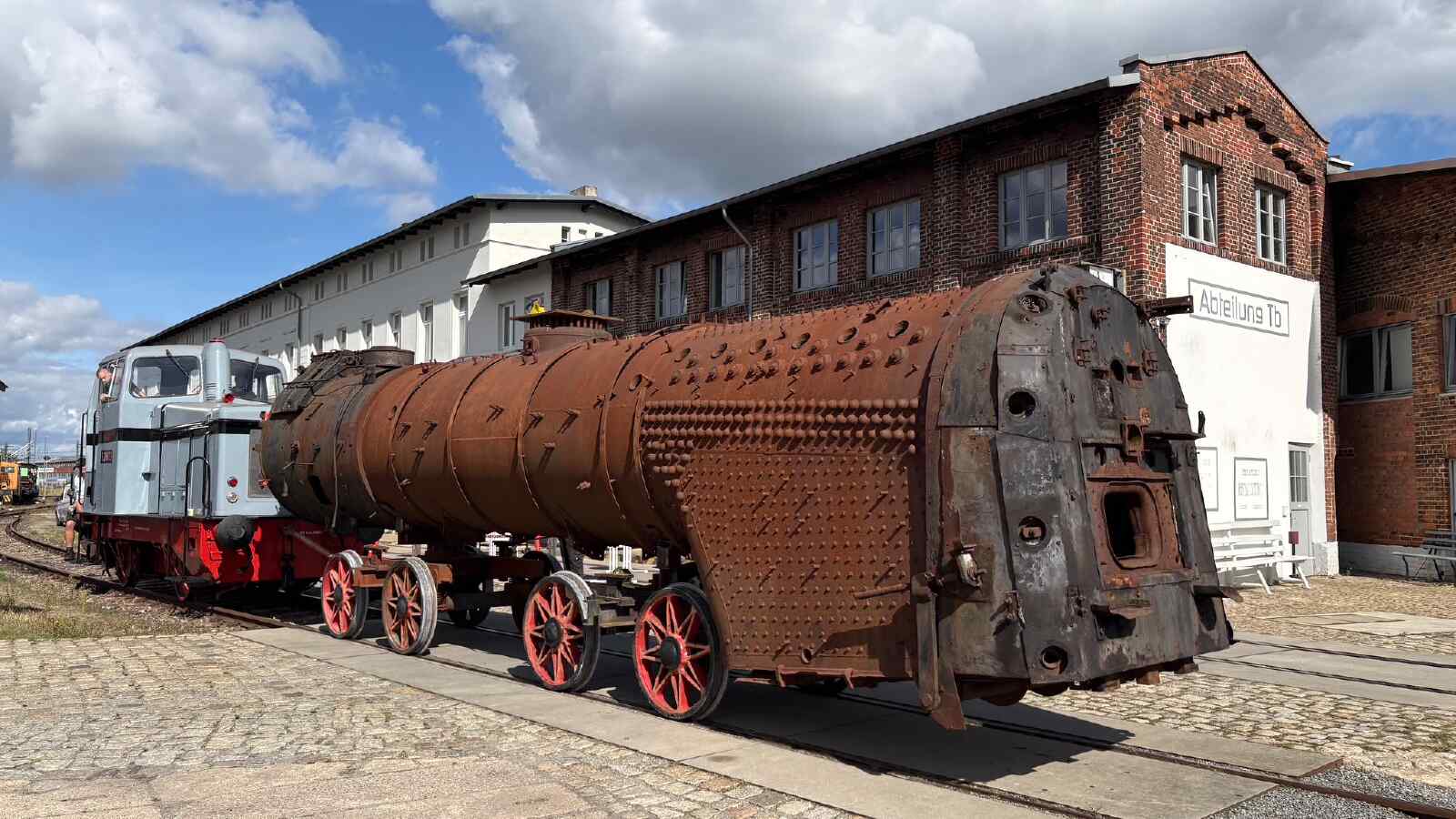
We are proud to report today on the biggest project we have ever completed in a single day. It was a combination of strength, finesse and a fair bit of hard work.As mentioned previously, we are currently working on steam locomotive 50 3682, which is due to be back in working order in due course. Unfortunately, its existing boiler is in such poor condition that repairing it would be too labour-intensive. We therefore looked for a replacement boiler that is in far better condition, even if this isn’t immediately apparent from its appearance. This boiler had previously been stored temporarily on a goods wagon.
The task last Saturday was to first lift the replacement boiler onto auxiliary bogies. These have the advantage of not being as high as the goods wagon, and they also provide better access to many parts of the boiler. The auxiliary bogies, which were actually used to transport passenger carriage bodies at the neighbouring repair workshop, had previously been adapted to safely support the round boiler.
The initial plan was to lift the boiler off the wagon using four lifting units, shunt the wagon away and manoeuvre the auxiliary bogies into position. To do this, the four lifting units – which can be operated synchronously via a central control system – first had to be precisely aligned.
The specially made cross-beams, each connecting the opposing lifting systems, were then laid out. They are fitted with special devices that prevent the round boiler from rolling away sideways. Finally, the bogie carrying the replacement boiler was manoeuvred into the workshop and positioned between the lifting systems. At last, the boiler could be lifted and the transport trolley moved away. The boiler was then placed on the auxiliary bogies and pushed in front of our locomotive shed.
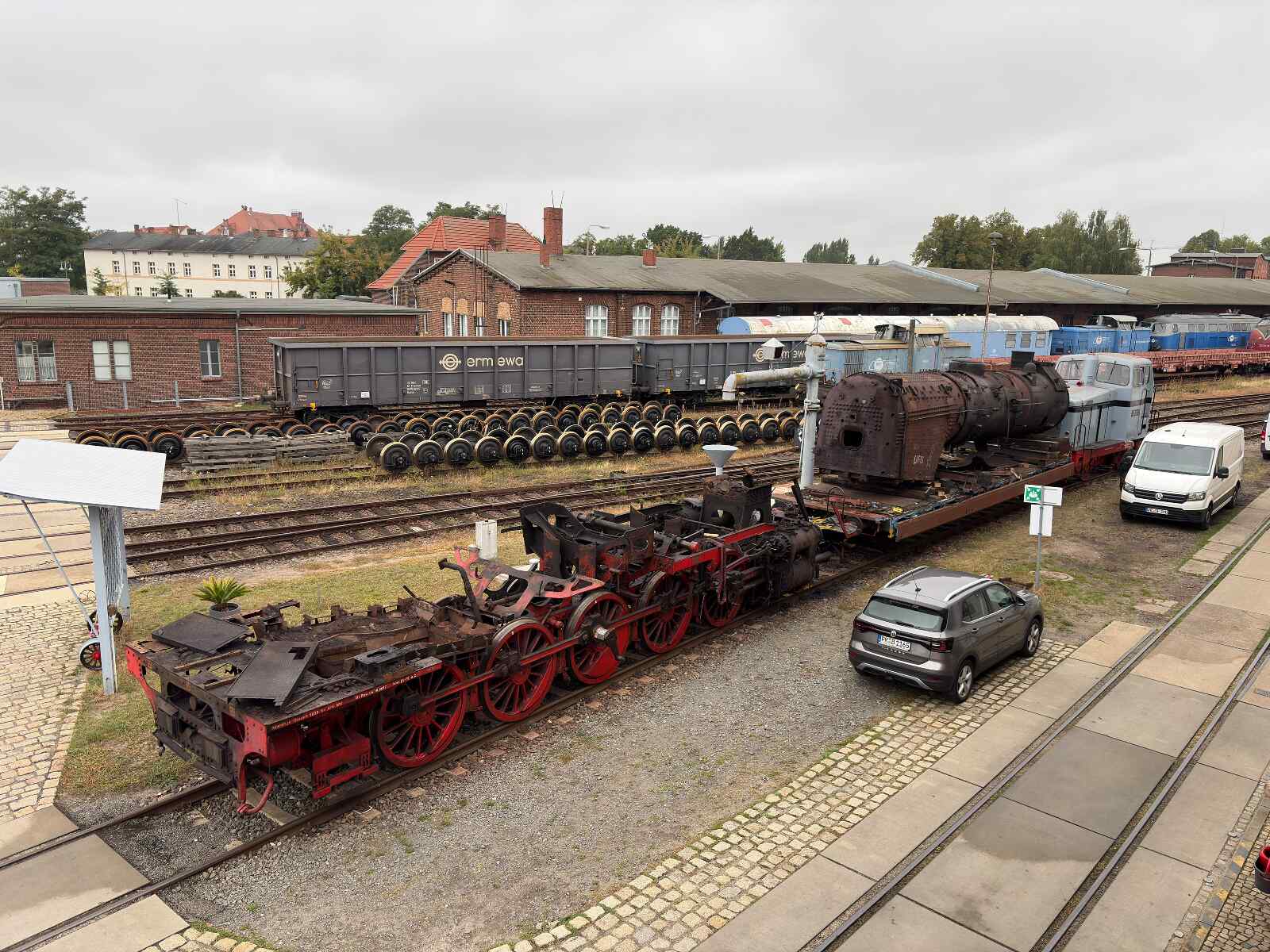
After lunch, we turned our attention to the locomotive, whose existing boiler also needed to be lifted off the frame and placed on the transport trolley. We had by now gained some experience with lifting operations, so lifting the boiler off the locomotive’s running gear went quite smoothly, once we had satisfied ourselves that all connections had indeed been released.
The boiler was then lifted off the frame. This required a keen eye to ensure that the hoists were running in perfect synchronisation and that the boiler was lifted evenly. Finally, the boiler was set down on the goods wagon, and the running gear and wagon were manoeuvred to the locations where they were to be stored for further work. By dusk, everything was in its place.
Dear readers, you can probably imagine that this was a mammoth task, one that initially filled us with a great deal of respect. After all, we’d never done anything like this ourselves before, and moving such large and heavy parts always carries a certain risk. We are therefore particularly proud and delighted that everything went according to plan. Thank you to the team – you’re the best! We would also like to take this opportunity to extend our heartfelt thanks to Schienenfahrzeugwerke Wittenberge for their logistical support.
The operation described above went largely unnoticed amidst the museum’s weekend activities. It is worth mentioning here that the Berlin/Brandenburg Chrysler Meet took place on our premises. A good two dozen Chrysler and Dodge cars were positioned photogenically across the museum grounds and were there for visitors to admire.
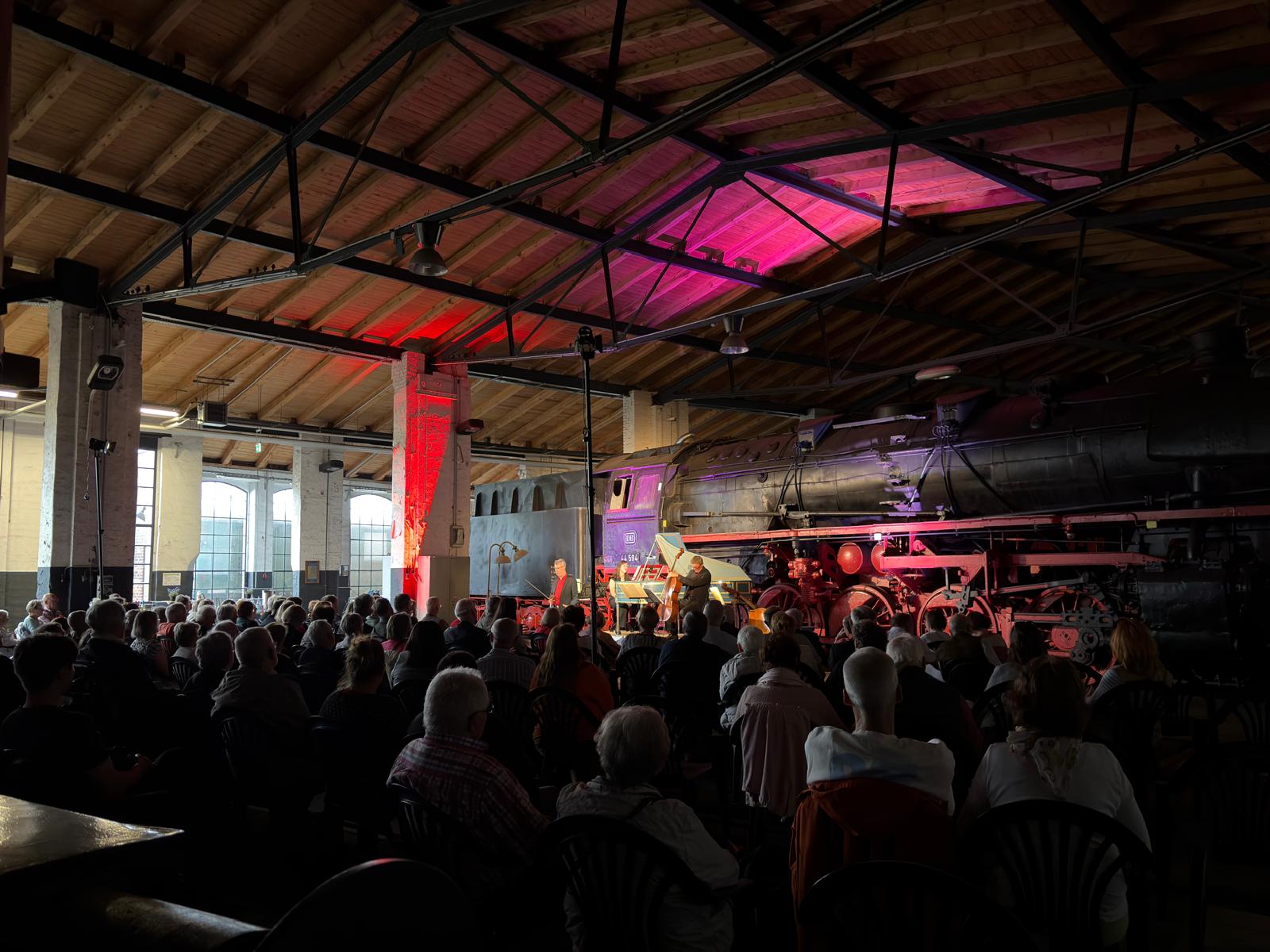
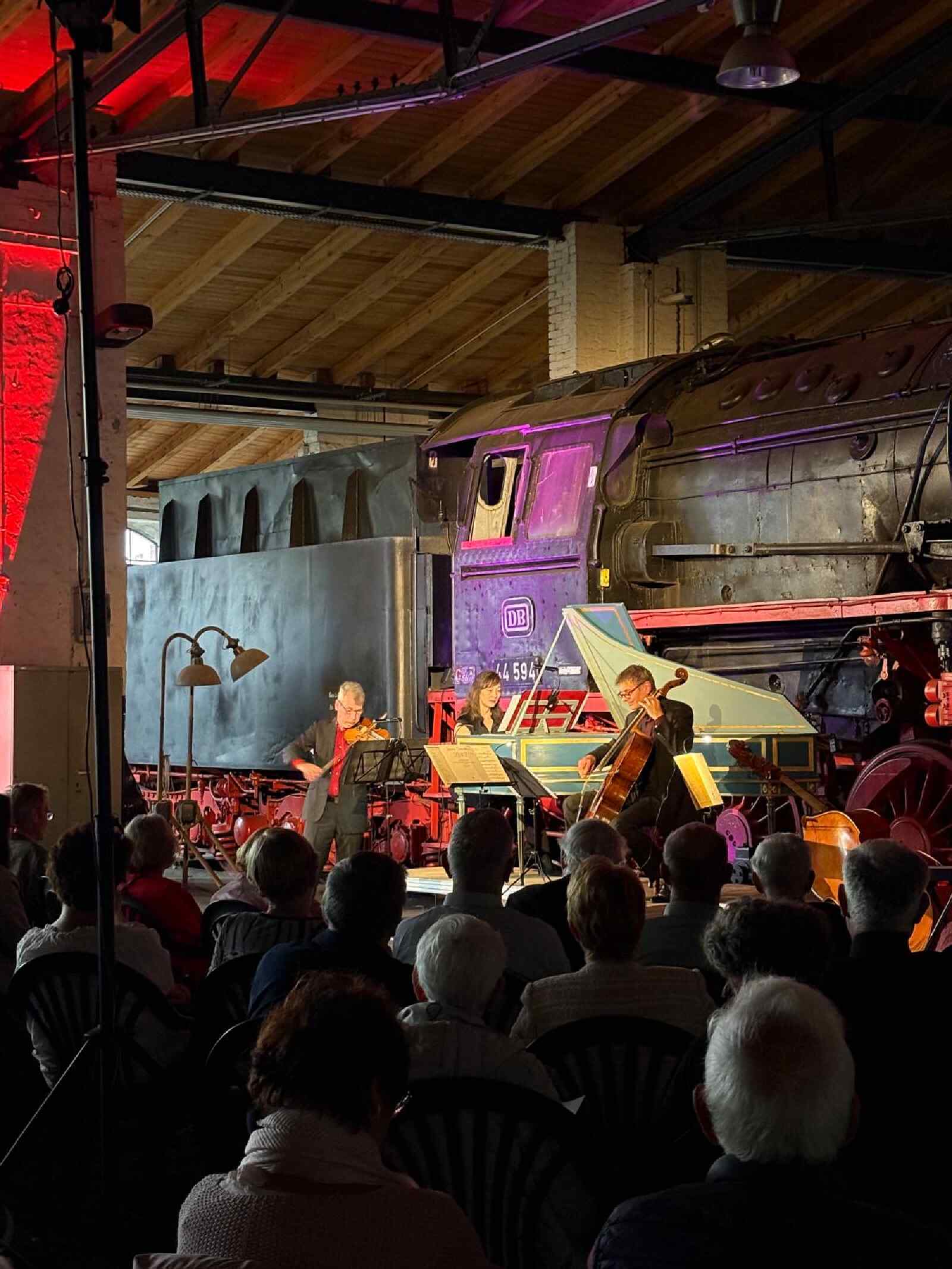
On Sunday, a truly remarkable classical concert also took place as part of the ‘Klanglandschaft Prignitz’ series of events. Well over a hundred members of the audience didn’t want to miss out on the pleasure. We’d like to say thank you for coming and for your support of the musicians. We’re already looking forward to the next concert in our hall.
So now we turn our attention to our next event in early October. As always, it promises to be great fun. We are already looking forward to the visit of the railcar from Neustrelitz, with which we will be offering special trips to the harbour in Wittenberge and to Osterburg. More details on this in the next newsletter in a few days’ time.
09.09.2026: Update on the coming weekend
As previously reported, on 12 September 2026 we will be welcoming the Chrysler/Dodge enthusiasts from Berlin and Brandenburg, who will be visiting us with around 30 gleaming and lovingly maintained vehicles. The plan is for participants in this year’s Chrysler Treffen Berlin/Brandenburg (CTB) to arrive at our museum grounds at around 11 am. Naturally, the vehicles will be on display on our museum grounds, and we are sure that the owners will be happy to answer any questions about the cars.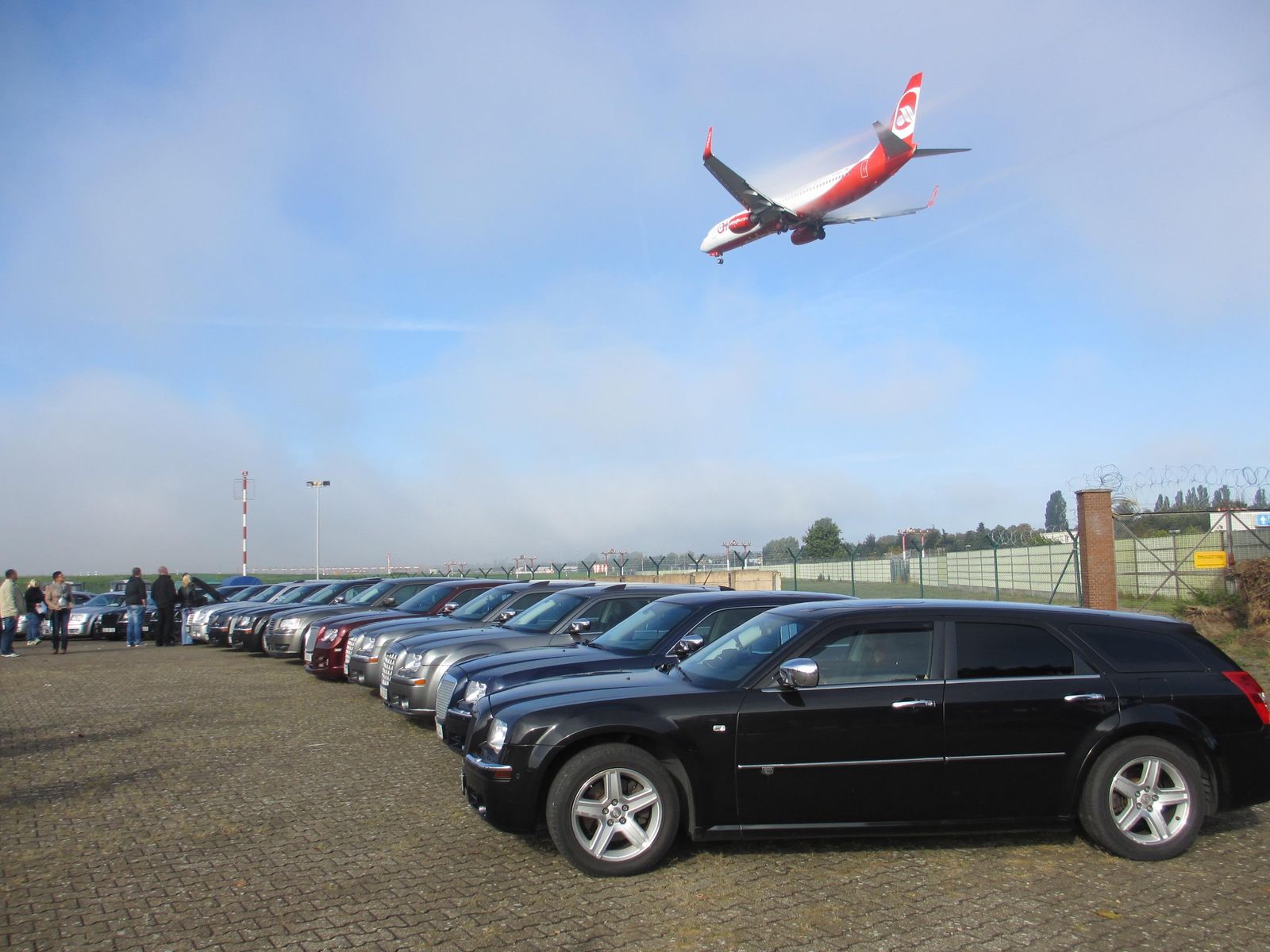
On 13 September 2026, the nationwide Open Monuments Day will take place once again, and we will be taking part. The locomotive shed will be open between 10 am and 2 pm (last admission at 1 pm). During this time, we will also be offering rides in the driver’s cab of a diesel locomotive. Admission will be free on the day. Of course, we have set up a donation box and would be delighted to receive your generous contribution. Thank you in advance!

As previously announced, a classical concert featuring works by Mozart and Bach will take place at the Lokschuppen from 3 pm as part of the ‘Klanglandschaft Prignitz’ series. We are sure it will be a real treat for your ears. Tickets are available at the venue for €14. By purchasing a ticket.
Further information can be found at the following link:
https://www.klanglandschaft-prignitz.de/klassik-im-lokschuppen
On both days, we will also be offering guided tours of the site. Our colleagues will be happy to guide visitors through the locomotive shed and the outdoor grounds on Saturday at 11.00 am and 2.00 pm, and on Sunday at 11.00 am.
On both days, the so-called ‘disaster train’ and our signal box will also be open to visitors during our opening hours. Incidentally, the train’s name does not, in fact, refer to its condition. Rather, according to the official GDR account, it and a total of 13 similar trains of the same design were built for use in the event of any civil disasters.
It was well suited to the task, as, in addition to its own power supply, it has a kitchen waggon and a mobile operating theatre for treating the injured. It remains in working order to this day.
https://www.dampflok-salzwedel.de/fahrzeug_19
29.08.2026: Summer break over
Dear friends of our museum, summer is irrevocably drawing to a close. We hope you had a lovely summer holiday and that your travels perhaps even brought you to visit us. Our staff have also had a few weeks’ break, and now we are joining forces to tackle the final third of the year.It is not just us who are hard at work; Wittenberge Council is too. Over the coming months, our access road from the Wm signal box to our gatehouse will be resurfaced. The old and crumbling concrete slabs will then have served their purpose and will be replaced by an asphalt surface. However, the slag stones at the edge will be retained, so that the historic character is preserved. As part of this work, we will also be fitted with a new service pipe to the locomotive shed.
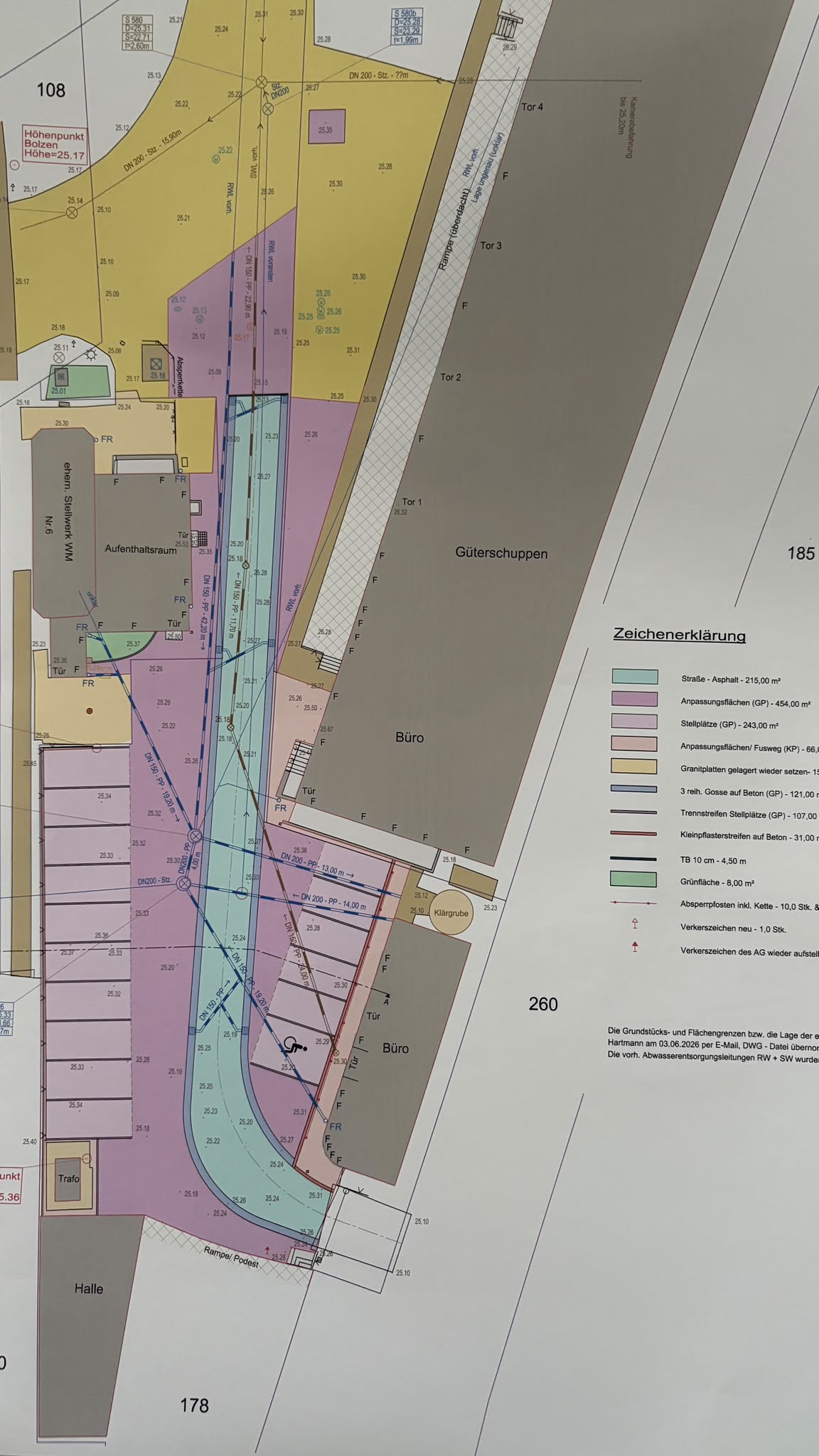
Construction is expected to begin in September. Access to our museum grounds will remain possible at all times. Please do not be put off by the building site.
Now for the upcoming events:
Car enthusiasts take note: on 12 September 2026, we will be welcoming the Chrysler/Dodge enthusiasts from Berlin and Brandenburg, who will be visiting us with around 30 gleaming and lovingly maintained vehicles. The plan is for participants in this year’s Chrysler Meet Berlin/Brandenburg (CTB) to arrive at our museum grounds at around 11.00. Naturally, the cars will be on display on our museum grounds, and we’re sure the owners will be happy to answer any questions about them.


On 13 September 2026, the nationwide Open Monuments Day will take place once again, and we will be taking part. The museum will be open between 10 am and 2 pm (last admission at 1 pm). During these hours, we will also be offering rides in the driver’s cab of a diesel locomotive. Admission is free on the day. We have, of course, set up a donation box and would be grateful for any generous contribution. Thank you in advance!
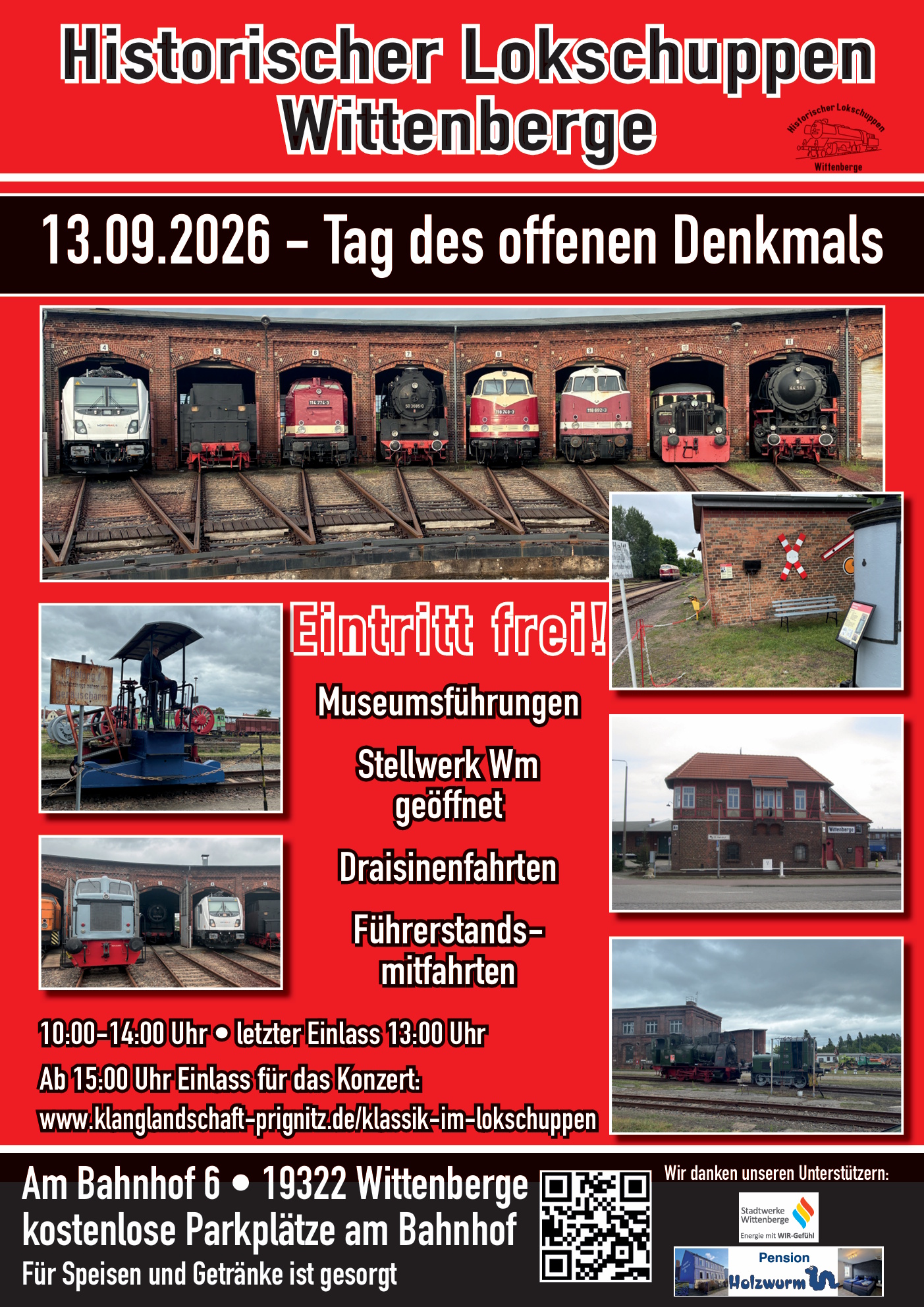
From 3 pm, another classical concert will take place at the Lokschuppen as part of the ‘Klanglandschaft Prignitz’ series, which have become something of a tradition here. Graduates, teachers and students from the district music school will perform music by Bach and Mozart. We are sure this will be a real treat for your ears. Tickets are available at the venue for €14. By purchasing a ticket, you’ll be supporting the Wittenberge Music School. Further information can be found at the following link:
https://www.klanglandschaft-prignitz.de/klassik-im-lokschuppen
Just six days later, on 19 September 2026, the Germany-wide ‘Day of the Railways’ will take place. This event sees service providers from the railway sector showcase their work to the public, and we’ll be taking part too.
Our next major event will take place on 9 and 10 October 2026 under the theme ‘Autumn Steam’. Further details will follow in the second half of September.
Dampflokfreunde Salzwedel e.V. Am Bahnhof 6, 19322 Wittenberge